How Does an LMS Measure Employee Training Effectiveness?
Companies invest time and resources in employee training, but how can they determine whether the training has actually been effective?
The number of participants and course completions can indicate training progress. However, these figures alone are not sufficient to confirm whether employees understand the content or can apply what they have learned to their daily work.
Measuring employee training effectiveness should begin with clearly defined learning objectives and the selection of relevant indicators that help determine whether those objectives have been achieved.
Before conducting training, organizations should identify the expected changes in employee knowledge, skills, or performance.
For example, the goal might be to improve understanding of company policies, enable employees to use a new internal system correctly, reduce operational errors, or enhance customer service quality.
Once these objectives are established, appropriate assessment methods can be selected.
Post-training quizzes may be useful for evaluating knowledge, while practical exercises, workplace observations, or supervisor assessments may be needed to measure employees' ability to perform specific tasks.
How Does an LMS Help Track Employee Training?
A Learning Management System (LMS) helps organizations manage and consolidate learning information within a centralized platform.
Depending on the features available in the selected LMS, organizations may be able to monitor several types of training data.
1. Course Completion Status
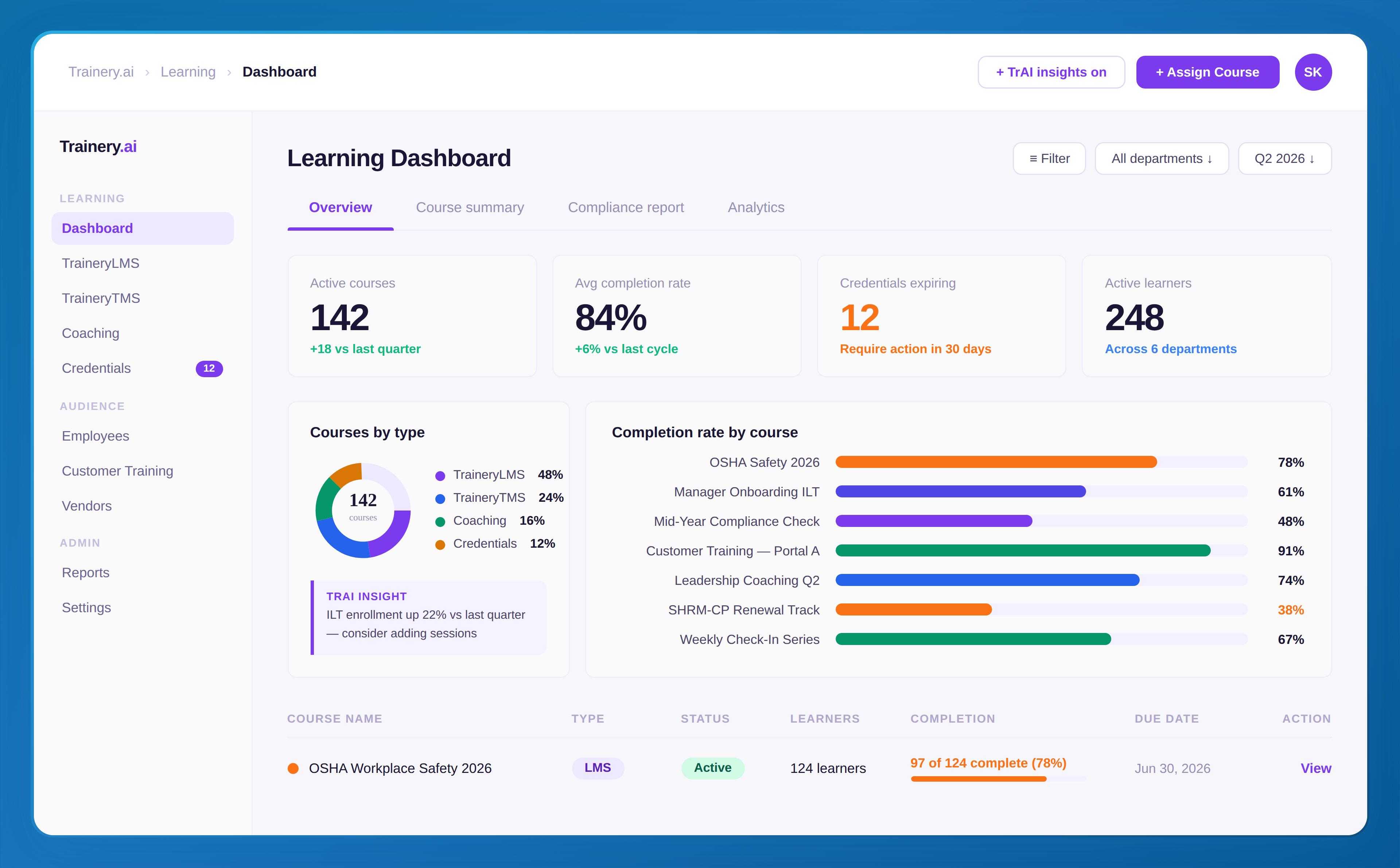
An LMS can track whether employees have started, are currently taking, or have completed assigned courses.
This information is particularly useful for mandatory training programs that employees must complete within a specified period.
2. Assessment Scores and Results
When courses include quizzes or assessments, an LMS with the appropriate features can record scores and assessment outcomes.
These results help training administrators identify topics that employees may need to review or understand more thoroughly.
3. Learner Progress
Some LMS platforms provide detailed information about learners' progress within individual courses.
This allows administrators to identify which sections employees have completed and where they may have stopped.
However, it is important to recognize that these metrics primarily reflect learning activity. They do not necessarily demonstrate that employees can apply their knowledge effectively in the workplace.
How Can Organizations Determine Whether Training Improves Job Performance?
After employees complete a training course, organizations should also examine performance indicators that relate directly to the training objectives.
These may include the number of operational errors before and after training, the time required to complete tasks, or evaluations conducted by supervisors.
The most appropriate indicators will depend on the purpose of each course.
For example, if employees receive training on a new internal system, effectiveness may be evaluated by observing whether they can complete required procedures correctly.
For customer service training, organizations may assess service quality alongside customer feedback.
Use Training Data to Improve Future Learning Programs
Training evaluation should not end when a report is submitted to management.
Organizations should use the collected information to identify difficult topics, understand challenges faced by learners, and determine whether adjustments to the content or delivery methods are necessary.
By combining LMS learning data with relevant workplace performance indicators, organizations can make more informed decisions about future employee training and continuous improvement.