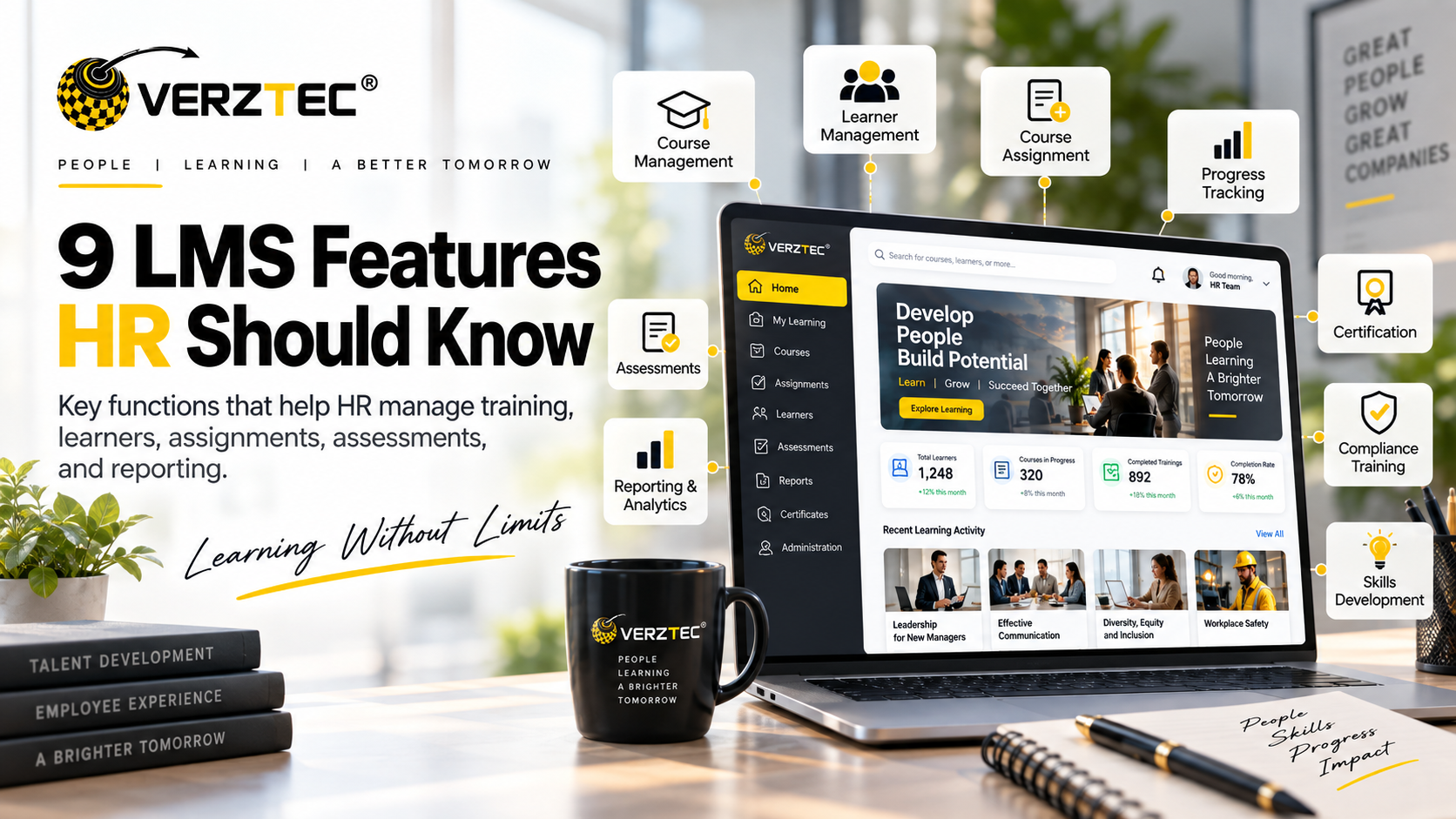
When an organization has a large number of employees, managing training involves more than simply creating courses and asking employees to complete them. HR teams also need to monitor learning progress, assessment results, completion status, and training reports.
A Learning Management System (LMS) can help centralize and simplify these processes.
Below are 9 key LMS features that HR teams should know.
1. Course Management
An LMS allows HR and training teams to organize different types of learning content in one system.
Courses may include:
• New employee onboarding
• Workplace safety training
• Compliance and policy training
• Product knowledge
• Sales training
• Customer service training
• Professional skills development
Courses can be categorized and organized so that administrators and employees can easily find relevant learning content.
2. Learner Management
HR teams can manage learners based on the organization's structure.
Employees can be grouped according to:
• Department
• Job position
• Business unit
• Location
• Employee group
• Other organizational criteria
This makes it easier to assign appropriate training to different employee groups.
3. Course Assignment
An LMS can assign specific courses to individual employees or groups of learners.
For example:
• New employees may be required to complete an onboarding course.
• Sales employees may be assigned product and sales training.
• Employees in certain roles may need to complete compliance or safety training.
Assignments can help ensure that employees receive training that is relevant to their responsibilities.
4. Learning Progress Tracking
HR and administrators can monitor employee learning progress through the LMS.
Information may include:
• Courses in progress
• Completed courses
• Completion dates
• Assessment results
• Training status
This allows HR teams to quickly identify employees who have completed required training and those who still need to finish their courses.
5. Quizzes and Assessments
An LMS can include quizzes, tests, or assessments to evaluate whether employees understand the training content.
Assessment results can help organizations measure learning outcomes and identify areas where additional training may be required.
6. Certification Management
For courses that require proof of completion, an LMS can support certificates or completion records.
Certificates may be used for:
• Compliance training
• Workplace safety
• Professional development
• Internal certification programs
The system can help HR maintain a centralized record of employee certifications.
7. Reporting and Analytics
HR teams need reliable learning data to monitor training activities.
An LMS can provide reports such as:
• Course completion rates
• Learner participation
• Assessment scores
• Training progress
• Course assignment status
• Certification records
These reports can support HR planning, management reporting, compliance monitoring, and employee development.
8. Compliance Training Management
Many organizations require employees to complete mandatory training on a recurring basis.
Examples include:
• Company policies
• Business ethics
• Data protection
• Workplace safety
• Regulatory requirements
An LMS can help HR assign required courses, track completion, and maintain training records in one system.
9. Employee Skills Development
An LMS can also support continuous employee development.
Organizations can create learning paths or training programs that help employees build skills relevant to their roles and future career development.
This may include technical skills, leadership skills, communication, customer service, sales, or other professional competencies.
Why Are LMS Features Important for HR?
Without a centralized system, HR teams may need to manage training through spreadsheets, emails, shared files, and manual follow-ups.
As the number of employees and courses increases, this approach can become difficult to manage.
An LMS provides HR with a centralized platform for managing learners, courses, assignments, assessments, progress tracking, certifications, and reporting.
This can help make employee training more structured, consistent, and easier to monitor.
How Verztec Supports LMS Development
Different organizations have different HR structures, training processes, reporting requirements, and system integration needs.
Verztec provides customized Learning Management System development and corporate learning solutions designed around an organization's specific requirements.
LMS functionality can include course management, learner management, assignments, assessments, learning progress tracking, reporting, certification, and integration with e-Learning content.
Verztec also provides e-Learning development, SCORM content, video learning, learning design, translation, and localization services to support a complete corporate learning ecosystem.
Looking for an LMS for Your HR Team?
If your organization is considering an LMS, start by reviewing your current training process, number of learners, course types, reporting requirements, and integration needs.
Talk to the Verztec team to explore an LMS solution that supports your organization's HR and employee development requirements.
Request an LMS Consultation
Request a Quotation
Learn More About LMS and e-Learning Solutions